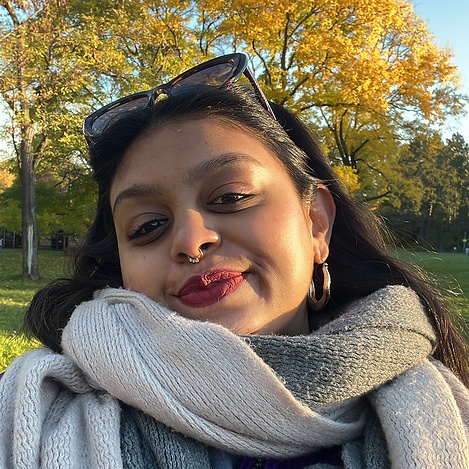
Maliha Mohsin
Performance, Embodiment and Agency: Self-Authorship amongst Gendered Minorities
This keynote response builds upon Morcom’s ethnographic work on Kothi and transgender erotic dancers in India, expanding it with the respondent’s own scholarship on emergent Hijra and transgender identities, rights, and mobilization in Bangladesh. The response brings three distinct ideas together. First, it juxtaposes the fading livelihood practices of kothi erotic dancers and Hijras with the emergent category of “transgender” as subjects of modern neoliberal nation-states, emphasizing the decolonial need to theorize gender as performative subject positions mediated by social, moral, and spiritual economies. Second, it sheds light on the emergence of agentive, self-authored performances by non-heteronormative, transgender, and queer artists in the era of TikTok reels, showing how digital self-representation is democratized across class, caste, and rural/urban divides through the potential for viral visibility. Third, the response reflects on the methodological potential that such self-authorship holds for collaborative ethnographic research with marginalized populations, seeking to guard against misrepresentation and cultural co-optation.
Maliha Mohsin is a doctoral candidate in Comparative Gender Studies at Central European University. They hold an M.A. in Critical Gender Studies from CEU and a B.Sc. in Psychology from University of Dhaka. Their research is at the intersection of gender/sexuality, sound & music, anthropology and politics, exploring potentials of decolonial feminist praxis. Their ongoing doctoral research, "Being Hijra and Muslim in Bangladesh: Discourses of Legality and Gendered Islamic Ritual Practices," explores Islamic religio-legal discourses that currently frame Hijra as Muslim subjects in Bangladesh. They explore Islamic religiosity and practices of Hijra in spaces and arrangements for Quran education, prayers, engagements and exchanges with Islamic institutions such as mosques and religious leaders, and devotional ritual spaces such as shrines, primarily in Dhaka.