
Concert & Dinner
Sonic Encounters
Music from the Afghan Diaspora and the Burgenland-Croatian Minority
Friday, 13.02.2026, 18:30–21:00
Concert Hall, Future Art Lab (mdw Campus)
This evening presents two traditional musical practices – distinct in sound, yet connected by histories of cultural marginalization and resilience. The program opens with two outstanding representatives of Afghan art music, who will perform classical ghazals and traditional songs from Afghanistan. Since the Taliban’s return to power and their ban on music, the musicians Shekib Rasa (vocals, harmonium) and Fayaz Mohammadi (tabla) have been living in exile, where they continue to preserve and sustain this endangered musical tradition. In contrast to this rather intimate and contemplative music, the second half of the evening presents music and dance of the Burgenland-Croatian minority, performed by the folklore ensemble Kolo Slavuj. Characterized by choral singing, dynamic choreographies, and a close interplay of music and movement, these traditions have been preserved across generations as a vital expression of communal life and cultural identity. Musicians and dancers fill the hall with rhythmic energy, bringing the evening to a lively and resonant conclusion.
Bios:
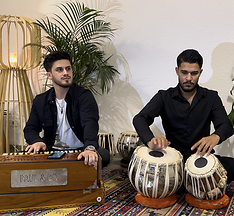 Shakib Rasa and Fayaz Mohammadi are musicians from Kabul, Afghanistan, who studied at the Afghanistan National Institute of Music (ANIM) – the country’s leading music institution before the Taliban takeover. Shakib Rasa started singing at the age of five, and began performing internationally in 2015. He studied ghazal and classical music under Ustad Moghaddam Mitra, a master musician from India, and piano with Ustad Adriana Stop, an American teacher. Fayaz Mohammadi studied tabla with Afghan master Ustad Fereydoun Miyazadeh, also at ANIM. Both are considered among the most talented young Afghan musicians of their generation. Following the Taliban takeover in 2021, they left Afghanistan and have been living in exile in Germany for the past three and a half years.
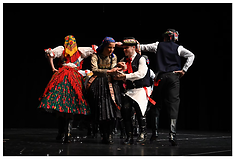 Kolo Slavuj is the central folklore ensemble of the Croatian minority in Burgenland. The Burgenland Croats migrated from Croatia to their current settlement area in the 16th century and are one of Austria’s six officially recognized ethnic groups (Volksgruppen). The transregional ensemble has existed since 1971, with members from Croatian villages in Burgenland, Hungary, Slovakia, and Vienna, where it is based. But there are also members from other ethnic groups and nationalities. The development of the ensemble and its repertoire reflect a cultural shift: while initially oriented toward the former homeland of Croatia, it now emphasizes regional characteristics of its current environment in Austria. The former “national” identity has given way to diverse regional and transcultural forms of belonging. Alongside its traditional repertoire, Kolo Slavuj blends traditional expressions with contemporary dance and music. Based on preserved elements of folk culture, this approach has produced new choreographies and musical arrangements.